The Invisible Cause of Bond Failure: Alpha Case.
Why 'Mystery Chipping' happens. Forensic analysis of the oxygen-enriched brittle layer in dental titanium substructures.
Technical Resource
TECHNICAL RESOURCE: For Dental Laboratory Technicians & Ceramists Only.
Pathology of a Failure
Risk Addressed
Porcelain Delamination (Late Failure)
At temperatures >600°C, titanium aggressively absorbs oxygen. This creates a hard, brittle surface layer called 'Alpha Case'. Porcelain fused to this layer does not bond to the metal; it bonds to a shell that cracks under masticatory force.
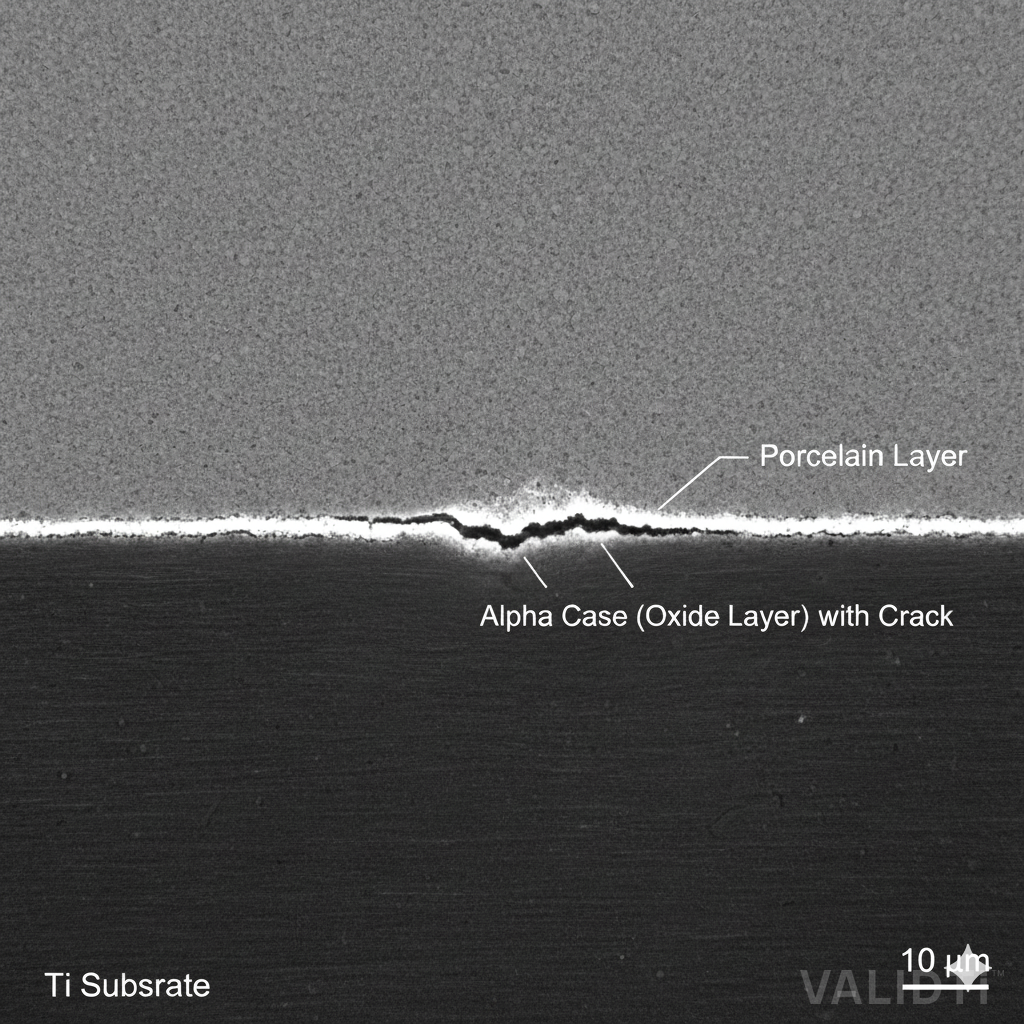
Fig 1. Fracture propagation along the brittle Alpha-Case interface. Cross-section micrograph showing fracture path.
The CTE Compatibility Lock
| Material | CTE (25-500°C) | Compatibility Status |
|---|---|---|
| ValidTi Grade 23 ELI | 9.7 x 10⁻⁶ K⁻¹ | Reference Standard |
| High-Fusing Porcelain | 8.8 - 9.4 x 10⁻⁶ K⁻¹ | Compression Bond (Optimal) |
| Generic Grade 5 Ti | Variable (Unstable) | Risk of Tension Cracks |
Risk Mitigation Protocol (SOP)
Milling
Use sharp burs to minimize friction heat (Heat creates Alpha Case).
Blasting
Remove surface layer with Al₂O₃ (110µm) at 2-3 bar.
Oxidation
Follow ValidTi firing chart strictly (Vacuum settings are critical).
Bonding
Apply bonder immediately after cleaning.
Engineering Resources
Secure Audit Request Portal